The Five Stages of Resonance: A Business Book That Transforms Leadership Communication
Dr. Stephen J. Crawford
Speaker Performance Architect
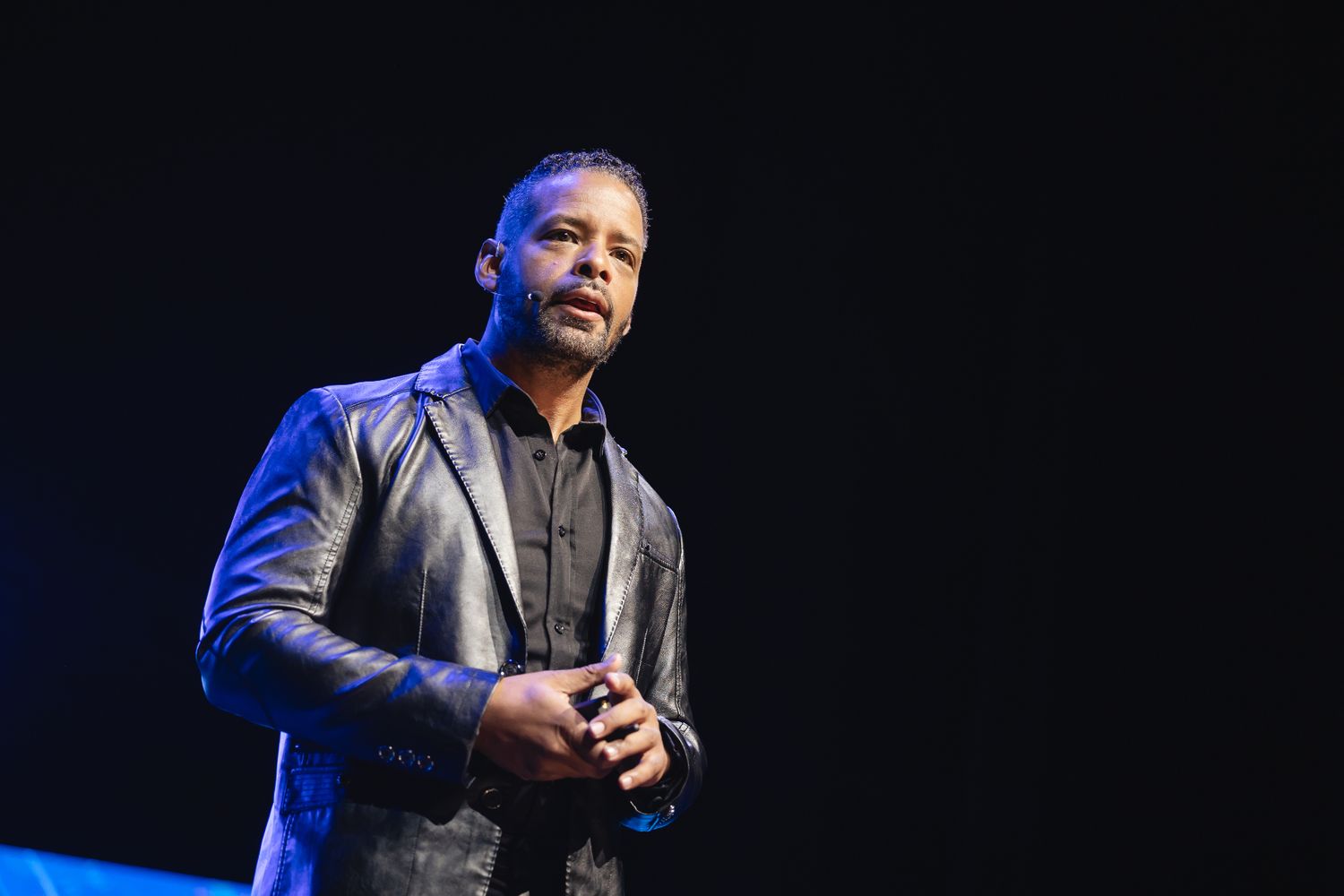
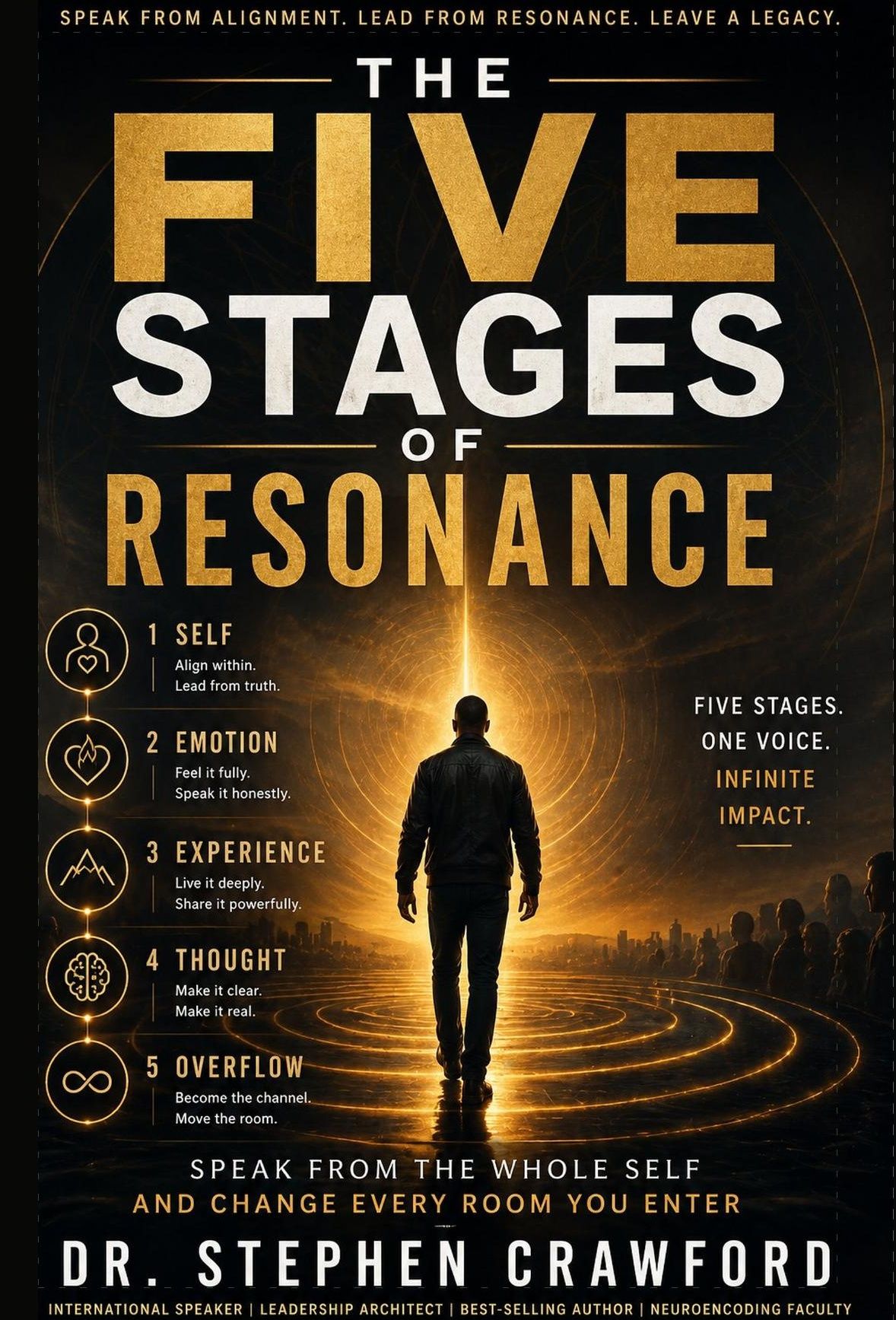
The Five Stages of Resonance by Dr. Stephen J. Crawford argues that leadership influence is a function of inner coherence rather than charisma or technique. The book maps five thresholds, character integrity, the emotional frequency, the experience threshold, thought as a discipline, and speaking from flow, that move a leader from a performed self to an integrated voice. It is written for executives who are already respected and still not felt.
Key Takeaways
- Influence comes from coherence between what a leader thinks, feels, and says, not from delivery polish.
- The five stages are sequential. Skipping to voice work while character integrity is unresolved produces a better-performed fracture.
- The journey is Unmask, Unscript, Unleash: remove the performed self, release rehearsed language, then speak from the whole self.
- Audiences read coherence unconsciously and immediately, long before they evaluate content.
- The framework is behavioral, not inspirational. Neuro-encoding is what makes the change hold past the workshop.
Why Another Business Book on Leadership Communication?
Most business books on leadership communication optimize the surface. Structure your message, control your body language, land your pauses, tell a story with a hook. All of it is true and none of it addresses the reason a competent leader can do everything correctly and still fail to move a room.
The reason is that audiences are not primarily processing your message. They are reading whether you are one person or two. Whether the words match the state underneath them. That read happens in seconds, unconsciously, and it governs everything that follows. A leader whose interior is fractured can execute flawless technique and still transmit static.
The Five Stages of Resonance starts there instead of ending there.
Stage One: Character Integrity, the Forge
Resonance begins with the raw material of a life, and with the heat and pressure that either warped it or tempered it. This is the stage most leadership development skips, because it is the least comfortable and the least immediately monetizable.
The work is reconciling the private reality with the public persona. Where those two diverge, a leader spends energy managing the gap, and that expenditure is visible as tension, over-control, or a subtle unwillingness to be still. When the gap closes, the leader stops leaking nervous energy and enters rooms already grounded, with no need to establish authority because nothing is being hidden.
Stage Two: The Emotional Frequency
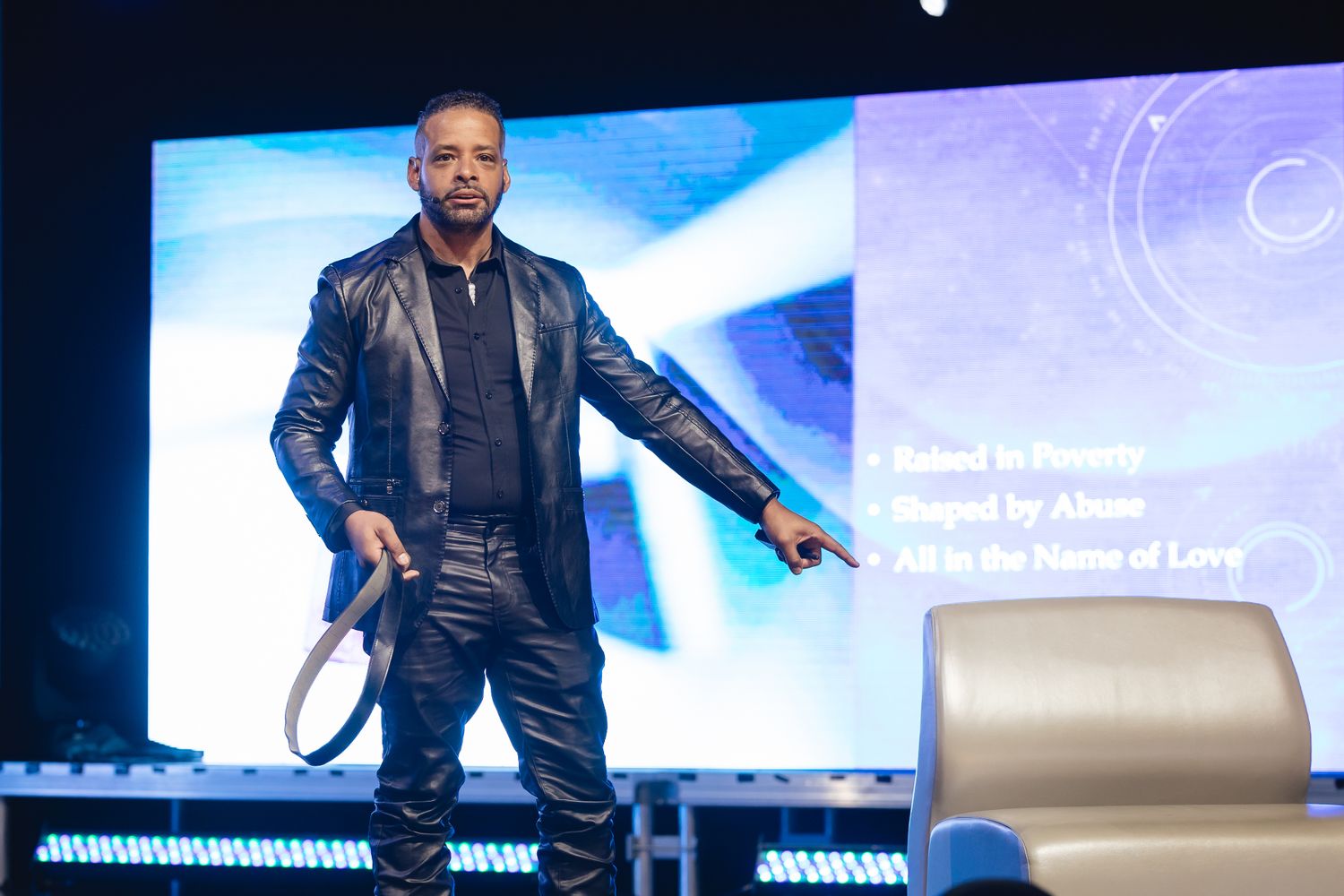
Every leader transmits an emotional signal whether or not they intend to. Anxiety, impatience, contempt, and genuine care all broadcast. Teams calibrate to that signal far more accurately than to any stated value.
Stage two is recognizing your own frequency and learning to tune it deliberately. This is not theatrical vulnerability and it is not emotional management in the suppressive sense. It is congruence: what you say matching what you actually feel, closely enough that a room's mirror neurons fire in alignment rather than in confusion.
Leaders who intellectualize are especially exposed here. Logic organizes information. Emotion creates movement. A perfectly reasoned case delivered from a flat frequency produces agreement without action, which is the most common failure mode in senior leadership.
Stage Three: The Experience Threshold
This is where polished speakers stall. There is a categorical difference between projecting a message at a room and taking a room across a threshold with you.
Crossing it requires expanding peripheral awareness enough to sense the collective state of the room, then meeting it where it actually is rather than where the agenda assumed it would be. Unspoken tension has to be named before it can be moved. A resonant leader validates what the room is carrying and then elevates it, which is a fundamentally different act from persuading past resistance.
Stage Four: Thought Is a Discipline
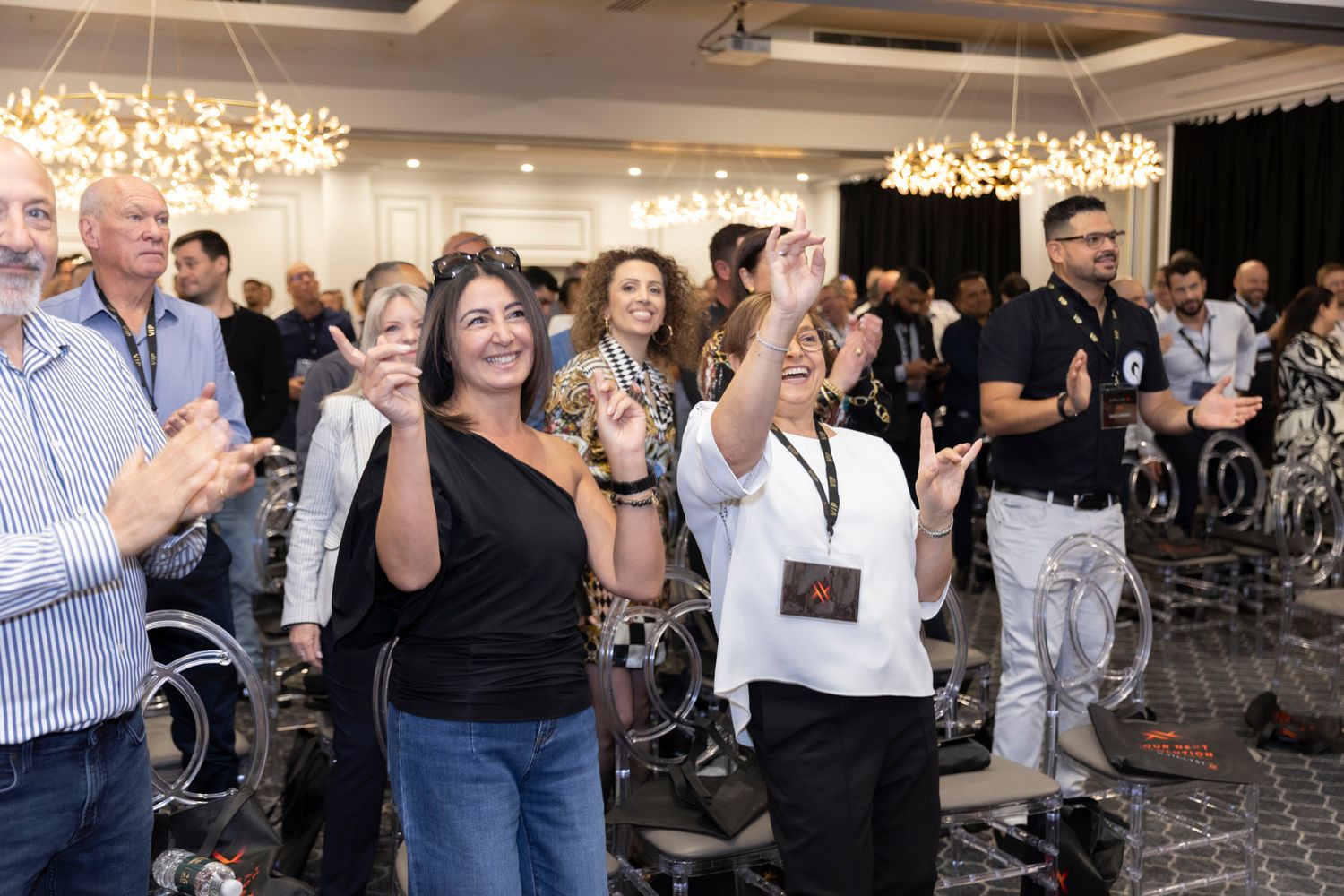
Presence without structure collapses under pressure. Stage four is the mental architecture that holds a clear line through interruption, hostility, fatigue, and the specific disorientation of being challenged in front of people who report to you.
Practically, this means knowing the one sentence you would keep if you lost every other one. It means having thought through the objection you are hoping nobody raises. Leaders who do this work become unusually calm under challenge, and rooms read that calm as authority earned rather than claimed.
Stage Five: Speaking From Flow
The final stage is speech without script and without strain, where preparation has been so fully integrated that it stops being visible. The leader is no longer exerting effort to persuade. Presence, conviction, and vision operate in unison, and the message moves from a presentation into something closer to a movement.
This is the state the book calls overflow. Its marker is simple: the impact outlives the room. Decisions accelerate afterward, language from the talk shows up in other people's mouths weeks later, and the culture shifts slightly in a direction nobody was instructed to move.
Unmask, Unscript, Unleash
The five stages are traversed in three movements.
- Unmask. Remove the performed self. Most executive presence training adds a layer; this removes one.
- Unscript. Release dependence on rehearsed language. Scripts are a form of protection, and rooms can feel the protection even when they cannot name it.
- Unleash. What remains once the mask and the script are gone, which is the whole self, speaking.
Why the Change Holds: Neuro-Encoding
A framework tells a leader where to go. It does not explain why the old pattern keeps pulling them back. Crawford's work as Lead Faculty at the NeuroEncoding Institute supplies that layer: pattern detection, neural disruption through memory reconsolidation, deliberate re-encoding through rehearsal, and integration into the surrounding environment.
This is the difference between a book that inspires and a book that changes behavior. Insight alone rewires nothing. Insight plus a mechanism does.
Who the Book Is For
- Executives who are respected on paper and not landing in the room, where the board defers and the all-hands stays polite.
- Founders who are compelling with eight people and read as uncertain in front of eight hundred.
- Senior leaders in transition, where credibility rather than competence is what is actually at stake.
- Leadership teams looking for a shared framework and a common vocabulary rather than another round of individual coaching.

Frequently Asked Questions
What are the five stages of resonance?
Character integrity (the forge), the emotional frequency, the experience threshold, thought as a discipline, and speaking from flow. Together they move a leader from a fractured, performed self to an integrated voice with influence that outlasts the moment.
Who wrote The Five Stages of Resonance?
Dr. Stephen J. Crawford, a leadership keynote speaker and executive coach who has reached more than three million people across 33 countries and serves as Lead Faculty at the NeuroEncoding Institute.
How is this different from other executive presence books?
Most executive presence books add technique on top of the existing self. This one works in the other direction, treating coherence as the source of influence and delivery as the downstream effect.
Do the stages have to be worked in order?
Yes. Each stage rests on the one before it. Voice and delivery work applied while stage one is unresolved produces a more convincing performance of the same fracture, which is why so much communication training fades within weeks.
Is the framework used in coaching as well as the book?
It is the spine of every keynote and every coaching engagement. The book is the map; the coaching is the diagnostic and the repetition that makes it hold.
Where to Go Next
- Read the pillar on Dr. Crawford's keynote speaking and coaching work.
- Learn how the stages apply across the classroom, the boardroom, and the auditorium.
- Explore executive coaching programs or check keynote availability.
Dr. Stephen J. Crawford is a leadership transformation strategist, keynote speaker, and the author of The Five Stages of Resonance. His work integrates nervous system regulation, narrative psychology, and executive presence into a unified approach to resonant leadership.
Command the Room. Transform Your Organization.
Whether preparing your C-suite for high-stakes quarterly pressure or inspiring thousands at your annual conference, partner with Dr. Stephen Crawford to activate biological resonance and decisive leadership.
Read Next
Executive Presence Under Pressure: How Transformational Leaders Apply The Forging Model
Discover how transformational leaders apply Dr. Stephen Crawford's Forging Model to alchemize high-stakes pressure into grounded executive presence and authority.
Keynote Speaking & CultureDr. Stephen Crawford: Leadership Keynote Speaker and Executive Coach
Leadership keynote speaker and executive coach Dr. Stephen Crawford has reached 3M+ people in 33 countries. Booking from $5,000. Check availability.